Friday, May 21, 2010

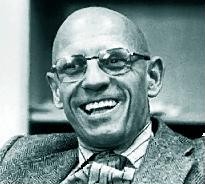
Taking Foucault to Church; Up, up, up to a point.


Can Foucault's conception of discipline be of use for Christianity or religion? If so, does it entail rejecting key components of Foucault's thought?

Foucault’s project aims to characterize and identify the structure and relations of power in the world. His goal is to examine and characterize society such that it is evident that all relations are in some way an influence of power. If he is correct, then it may be the case that there has never been a move towards Humanism since the Enlightenment. It may be the case that influence of power and the use of power has been relocated or adjusted but remains ever present. Foucault may be read in three ways; either his project is descriptive, normative or a combination of both. If normative then Foucault’s project runs into immediate problems with Christianity and religion in a broader sense. A Christian must reject key components of Foucault’s thought from a normative reading. If Foucault is read as merely descriptive, similar in a way perhaps to Nietzsche, then perhaps there is some use for his project. What will be found is that in a theological sense there is ultimately a rejection of Foucault. His project is only useful in inspiring the rejection of the power and influence of institutions in this world. His descriptive project is applicable to Christian thought while his normative project directly conflicts at times with essential components of Christianity.

First, it is useful to understand the concept of power that Foucault develops in Discipline and Punish. There is a subject of power and the ultimate end for power is to conform the subject to a desired standard. The various uses of discipline are the means by which this conforming of the subject is completed[1] because ‘discipline makes possible the operation of a relational power which sustains itself’. Through discipline the power relation is established and maintained. The methods of discipline are through hierarchical observation and normalizing judgment. Power coerces by observation and in the subject there is an ever present awareness of this observation[2]. Because observation is one sided the subject feels as though the observer is ever present whether that is actually the case or not. In schools, prisons, workplaces, and hospitals the one sided observation begins with the very architecture of institutions. Individuals are secluded and put into specific spaces very much like in a factory[3] so that behavior can be carefully monitored. One who feels observed is much more likely to adjust behavior so the very concept of observation eventually influences the subject. Observation becomes routine and expected by the subject. In this way institutions and the observation employed are always a coercive influence of power.

In addition to hierarchical observation power is exercised through a process of ‘normalizing judgment’[4]. Through the act of punishing individuals are differentiated and a norm is established[5]. A subject is controlled on a very basic level with specific time tables and planned activity. Institutions habituate a complacent reaction to control by structuring every aspect, even insignificant aspects, of the life of the subject. Individuals are quantitatively held to the norm created by those in power through a system of both reward and punishment. What Foucault is describing is how power influences through punishment in a way that ‘normalizes’ the individual until individuality is ultimately lost. Essentially, Foucault sees all societal institutions on a basic level as power being used to rob, rather than affirm, the humanity of the subject. In this way he believes that the claim towards Humanism in modern society is nothing but a lie.

This conception of institutions and power is on a prima facie reading quite cynical. A normative reading of Foucault seems to point towards a rebellion against established power relations. By participation in a culture of hierarchical observation and normalizing judgment a subject is ‘normalized’. It seems to be the case then that Foucault would assert that a breaking away from society and its power relations is the only way to reclaim humanity for the subject. But it is difficult to see how one could actually normatively apply this inherent cynical mistrust of power relations in society. It would be exceptionally difficult for an individual to live in such a way that all institutions and relationships are ignored. The power relations Foucault indentifies as normalizing are by his standards present in every institution and every relationship an individual may have. If one is to take a normative stance on Foucault it may be a position holding that he wishes to motivate individuals to change the abuses of power in the world[6]. Foucault’s characterization certainly seems to make it so that the influence of power in institutions is inescapable so reform is the only defensible normative option available.

Christians, however, will ultimately reject key components of Foucault’s thought if a proper relation with God is formed. This is the case because while Foucault on a light reading calls for reform a more stringent reading calls for resistance to and possibly rebellion against the influences of power. If it is the case that Foucault believes submission to power precludes individuality and freedom then he cannot be reconciled with Christianity. God’s perfection, as Creator and the omni-omni, necessitates that the individual, as an imperfect creation, become submissive. Foucault’s resistance to submission comes from his Enlightenment conception of freedom which makes the autonomous will primary[7]. What this means is that Foucault’s very conception of the importance of individual freedom is contradictory to a proper relation to God. Christians must give up an Enlightenment sense of freedom because God is the Power to Whom all is due; to remove oneself from this submissive position is to make a move away from and against God. In being a Christian an individual willfully places himself or herself as the subject to the highest Power and thereby contradicts any movement towards freedom Foucault could command one to make. A Christian’s conception must be that submission to God’s power is unequivocally good and desirable above all else; Foucault condemns any sacrifice of individuality through a relation of power. It is in this way that Christianity contradicts some key components of Foucault’s project.

However, on a more descriptive reading that can only normatively inspire a need for change in the world there is hope for Foucault’s project in Christianity. Though a Christian may not ultimately reject a submission to God’s will it is possible to understand Foucault’s condemnation of worldly institutions. An individual may be subjected to hierarchical organization and normalizing judgment by any institution Foucault points out (school, workplace, hospital, etc). Christians must be aware that the normalizing that takes place in such institutions must be condemned but for reason Foucault would not recognize. It is not for the sake of one’s freedom that one must ultimately reject submission to worldly institutions but rather for sake of a proper relation to God. It must be constantly recalled that Christians are called not to conform to things of ‘this world’ (Rom 12:2)[8]. If recognized and coupled with Foucault’s idea that all worldly institution seek to subvert the individual then perhaps his project is worthwhile. But resistance to worldly institutions is a component to the act of submitting ultimately and utterly to God’s will and His power in such a way that Foucault could not allow.

The descriptive reading of Foucault is useful for Christians because it will inspire a rejection of worldly institutions to which Christians are ultimately obligated. Foucault is correct to describe institutions as controlled by those with power with the intent of subjecting individuals and robbing identity and freedom. This is done first through the process of permeating a subject’s life with methods of one sided observation that ultimately causes the subject to alter behavior independently. The second part of the process is through the punishment and reward of an individual as they are quantitatively held to a norm created by those in power. Understanding the state of affairs in the world is essential to the Christian subject because of the obligation to resist submission to things of ‘this world’. However, it is ultimately for the act of subjecting oneself to the will and perfection of God that a Christian must act. In this way, Foucault may be carried only so far and truly only in a descriptive capacity by a Christian subject. Foucault does not allow for the necessitated submission to God’s will and power Christians must complete. Though at first an unsettling thought it is necessary for Christians to abandon the Enlightenment primacy of individual freedom to which Foucault so desperately clings. Christians are called not to seek freedom in the world but rather to sacrifice freedom ultimately for the sake of a proper relation to God.


[1] Foucault, Michel. Discipline and Punish. p 177

[2] Ibid., 170

[3] Ibid., 174

[4] Ibid., 177

[5] Ibid., 183

[6] Smith, James. Power/Knowledge/Discipline: Foucault and the Possibilities of a Postmodern Church p 9

[7] Ibid., p 11

[8] Ibid.


Tonight was the unexpected brand of awesome but still awesome kind of awesome. Natalie and I adventured to the Louisville Loves Mountains festival on Longest Ave next to Heine Brothers. Unexpected events of the evening included (1) walking up to the event seeing 300 people there (as opposed to 30) and (2) witnessing the birth, life and death of a severe thunderstorm right overhead (3) one of the bluegrass band member's all red outfit without shoes walking around in serious Kentucky fashion. We heard about a song and a half from the aforementioned man in red pants' band before the storm. We also heard a man from eastern Kentucky talking about for the need for a change in the economy. Said change will ideally save miners from over exposure to the things that cause black lung disease and a shift from coal power to solar and wind power. This guy was awesome and pounded the point that either people will commit to the planet and undergo a very real transformation or watch everything die. He talked about finding a man who lives on 6000 a year in a very secluded holler in eastern Kentucky who has, in preparation for the future, begun operating his space heater and other things on energy from the sun. Interesting considering all the city folk are too positive solar energy is inefficient or too expensive. It was good to see that at least some people in Louisville are worried about something a bit removed from our local environment here. Maybe people will be transformed and the coal industry will crumble for the ultimate benefit of the workers it kills off. Jobs have to be somewhere else for these people. In the mean time awareness must be spread and bluegrass music accompanied by good beer and good coffee is a smart way to go about things. Even if girls who do not shave their armpits still bother me. I wonder if it is wrong that it bothers me. But it still bothers me; gross.

Thursday, April 29, 2010

Heidegger, Hegel, Time and God Explosion


Today in class I could not handle the amount of thinking going on in the room. I also could not handle the amount of accidental blasphemy coming out of my own mouth. It was awesome. It was the result of a presentation of my final paper in that class where I spoke on my thesis and supporting argument. Then we had a discussion about implications of my thesis in general and possibilities for expansion of the paper before it is due next week. I will try to briefly explain my paper and the resulting conversation.

My paper argues that people only understand being through relation to the temporal world. Things only matter to us because they exist in the world and we understand them in time. If God exists as an eternal being outside of time then it seems to be the case that there is a problem in figuring out how we interact with Him since we are confined to time and things in this world. It also is odd to suggest that there is some gap between God and His creation. Given the limited nature of our existence there had to be a movement by God in which He took on human characteristics so that we might understand Him. solution: Christ's Incarnation.

these are the questions that came up from discussion of this thesis:

Is God a being or perhaps Being itself?

Saying He is Being or that time exists inside Him is atheism in disguise is it not?

If things matter to us precisely because of our place in time how could things matter to God in the same way since He is outside of time and therefore the things that matter to us?

What are the implications of the incarnation for God?

Could it be the case that he gained knowledge of human experience through the incarnation?

As in could He have come into an understanding of what it meant to be human previously not held?

Is the answer to the previous question be indicated by or connected to how God went around smiting people in the OT then stopped in the NT?

Is God's most characteristic activity unification of temporal and divine, finite and infinite?


Is any of this really important, practically speaking?

If it is important then what does it mean about prayer? Or God's command to Abraham?

These are a few of the things that came up. Typing them makes my brain explode again.

Thursday, April 22, 2010

Habermas and --there is a bee in my face.


Jurgen Habermas is a philosopher we have recently studied in Contemporary Philosophy. All non-philosophy majors, you may now clean your vomit off of yourself. He has an idea that is very interesting and important to understand. I will be brief.

His idea is that there ARE universal moral values. (no moral skeptics allowed)

But he understands that there are a multitude of different and society's from which moral values are formed. Often these values can come into conflict with values from somewhere else.

Moral Skeptics think this is reason to say there are no universal moral values. Silly Moral Skeptics. Not so.

Habermas believes there must be rational public discourse in order to determine what values are universal. Though they may be difficult to reach, he believes ultimately they will be reached anyway. Rational public discourse: talking about things, using reason to establish claims with relevant grounds, out in the open and with a goal in mind.


This idea that rational public discourse is essential is something that escapes so many people. Politicians certainly are not into this kind of chat. Neither are churches. Or school boards. Or the food industry. Or college students. Or anyone.

What would the world be like if people at the very least attempted to acknowledge the biases of their respective backgrounds and then agreed to a conversation that hopes to result in find common ground? It seems so simple but everyone is so caught up in themselves. I am caught up in myself.

The solution: stop. think.

Wednesday, April 21, 2010

when i was younger i was so optimistic


This is a post dedicated to Aaron Padgett. Mostly because we had a quality chat last evening and there are a few things worth noting. Conversation is fluid and random so most of these thoughts are only connected by a small common thread. A short outline may be worthwhile.

I. Is Ghandi going to Hell?
II. What does it mean to worship?
III. Community?
IV. Ministering to a college campus?

I. This issue is not problematic for a certain kind of Christian believer. That is the product of a certain kind of background in a certain kind of church. Many people think that an argument over this issue is mere nonsense (of course Ghandi will go to Hell, he did not profess Christ as his Saviour). This is the case for anyone who believes (a) scripture is absolute truth in every instance and (b) that it is possible for any one individual to understand the scripture. For the purposes of argument it is quite nice to suppose neither (a) nor (b); scripture is flawed to a degree and there are some things outside of our understanding. If this is the case then the Ghandi talk is worthwhile. One important assumption is still presupposed here: Christ's divinity was necessary for humans. This is because as humans we only understand things in a worldly context. We understand ourselves given our past, what we hope for the future and how both interact with the present. It is impossible to not understand ourselves in relation to worldly relations, world events, material things and our own conception of time. God, as a Creator existing eternally and outside of time, took on human characteristics, through Christ, so a limited Creation could have interaction with the eternal. This does not explain how He interacts (as when He commands Abraham to kill Isaac) with humans in other specific instances. It also does not explain whether or not God may have ALSO revealed Himself to the world through an individual like Ghandi. Peaceful revolution, saving of millions of lives, justice and equality. A lot of Jesus in a tiny man from India. Christians can be right and Ghandi can go to heaven; the two do not have to be mutually exclusive. However, we are fortunate that God, in the end, will make the decision. Blasphemy, anyone?

II. It is hard to say what it really means to worship. But it seems to be the case that many people have a very closed idea of what worship means. For these people worship means going to church services, singing, listening to a sermon and leaving as scheduled. People find emotional connection in certain songs and a certain context; God feels immediately present when surrounded by believers in front of a band playing songs to which everyone knows the words. But being stuck in this context cheapens and dissolves the value of such an experience because worship itself is a much more massive concept. Aaron and I theorize that perhaps worship happens when two people sit down and ask each other questions. Perhaps worship happens when someone opens the door for somebody else. Perhaps worship happens when you go on a mission trip to Africa or when you pick up a piece of trash on the sidewalk. If a connection with God is only found in a comfort zone then a faith founded on such a basis can be easily taken away. Worship is something that must, for a Christian, permeate all things. This is also the most troubling part about being a Christian because tendencies of most people are not 100% worship oriented all the time. Or 50% of the time. Or 20% of the time. But it is only by understanding that worship cannot be confined to activity within the walls of a church or chapel that an awareness of the true nature of worship can begin. It is within this context, the all inclusive context, and not the exclusive worship in church context, from which truly inspired living begins.

III. Quite similarly to these ideas about worship, community is something Christians both swear they are founded upon and simultaneously refuse to engage. It a tragic and damaging mistake to build a community exclusively made up of Christian individuals. Being trapped inside such a community throws a cloud over the truth that is the world outside of church and thus warped ideologies are formed. It is also important to consider perhaps that there is a clear distinction between going out with the intent to convert and the mere act of building community. Preach the gospel, when necessary use words. It is an old thought that is seldom applied. Maybe it is the case that in some instances the homeless addict does not immediately need to hear scripture or a profession of faith. Rather, he needs a cup of coffee and someone to hear his story, maybe a sandwich also. When Christians go out with the intent to convert it is easy to miss out on the intent to love. If a community is to be built there must be something more than tolerance because tolerance suggests that a barrier still exists. Acceptance, cooperation and understanding. The conversation. Building a Christian community is more than important. But there is more community evident and available in the world than that. Interfaith community, community built between different classes, social groups and races. All of these things are precluded by an operating assumption that immediate Christian community is the most important thing. Kierkegaard points us towards a love that is directed neither at flaws nor positive attributes. Loving simply for the sake of the beloved; the mother equally to the drug addict and the pastor equally to the convict. Loving like this requires a bit of a sacrifice of personal goals or gain. It is in this way community must be built. Maintaining a closed off Christian community will eventually have disastrous consequences. So the point is to get out there with all people and act in such a way that they wonder where such a person is coming from.

IV. Understanding that there is a multiplicity of types of community available to be built it is very difficult to think of how it is possible to successfully minister to a college campus. Again, Aaron and I theorize that so adjustment is needed in this particular department (not that our thoughts are identical but similar enough to start a sentence like this). The easy, safe route is to create a campus ministry that is a safe haven for young Christian people. A worship service that all the same involved people will attend, projects and trips and events organized for the same group of people. Sermons heard by the convinced and vindication for those who do not need it. If truly oriented towards being a ministry such an organization has to actually minister. Given the secular state of things both on campus and in the world this means some adjustments have to be made. It is well intended but a bit misguided to go room to room praying for people not involved with the Christian community on campus. That is an outwardly abrasive and condescending gesture that in itself creates a barrier between the Christian and secular communities. Perhaps the Christian community should do things like have a volleyball tournament, cookout, basketball game, movie night or something to show that Christians are normal people too. Sometimes the Christian agenda must be subverted, though only for a moment, so that the Christian community successfully achieves the message that it wants to be inclusive and loving. Failure to understand that a closed Christian community is woefully unattractive and intimidating to the outsider is simply put, embarrassing. So questions must be asked about how it is others may be reached. Preach the gospel, when necessary use words. Simple and not so simple all at once.