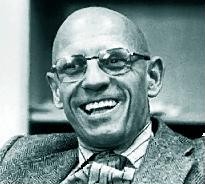
Can Foucault's conception of discipline be of use for Christianity or religion? If so, does it entail rejecting key components of Foucault's thought?
Foucault’s project aims to characterize and identify the structure and relations of power in the world. His goal is to examine and characterize society such that it is evident that all relations are in some way an influence of power. If he is correct, then it may be the case that there has never been a move towards Humanism since the Enlightenment. It may be the case that influence of power and the use of power has been relocated or adjusted but remains ever present. Foucault may be read in three ways; either his project is descriptive, normative or a combination of both. If normative then Foucault’s project runs into immediate problems with Christianity and religion in a broader sense. A Christian must reject key components of Foucault’s thought from a normative reading. If Foucault is read as merely descriptive, similar in a way perhaps to Nietzsche, then perhaps there is some use for his project. What will be found is that in a theological sense there is ultimately a rejection of Foucault. His project is only useful in inspiring the rejection of the power and influence of institutions in this world. His descriptive project is applicable to Christian thought while his normative project directly conflicts at times with essential components of Christianity.
First, it is useful to understand the concept of power that Foucault develops in Discipline and Punish. There is a subject of power and the ultimate end for power is to conform the subject to a desired standard. The various uses of discipline are the means by which this conforming of the subject is completed[1] because ‘discipline makes possible the operation of a relational power which sustains itself’. Through discipline the power relation is established and maintained. The methods of discipline are through hierarchical observation and normalizing judgment. Power coerces by observation and in the subject there is an ever present awareness of this observation[2]. Because observation is one sided the subject feels as though the observer is ever present whether that is actually the case or not. In schools, prisons, workplaces, and hospitals the one sided observation begins with the very architecture of institutions. Individuals are secluded and put into specific spaces very much like in a factory[3] so that behavior can be carefully monitored. One who feels observed is much more likely to adjust behavior so the very concept of observation eventually influences the subject. Observation becomes routine and expected by the subject. In this way institutions and the observation employed are always a coercive influence of power.
In addition to hierarchical observation power is exercised through a process of ‘normalizing judgment’[4]. Through the act of punishing individuals are differentiated and a norm is established[5]. A subject is controlled on a very basic level with specific time tables and planned activity. Institutions habituate a complacent reaction to control by structuring every aspect, even insignificant aspects, of the life of the subject. Individuals are quantitatively held to the norm created by those in power through a system of both reward and punishment. What Foucault is describing is how power influences through punishment in a way that ‘normalizes’ the individual until individuality is ultimately lost. Essentially, Foucault sees all societal institutions on a basic level as power being used to rob, rather than affirm, the humanity of the subject. In this way he believes that the claim towards Humanism in modern society is nothing but a lie.
This conception of institutions and power is on a prima facie reading quite cynical. A normative reading of Foucault seems to point towards a rebellion against established power relations. By participation in a culture of hierarchical observation and normalizing judgment a subject is ‘normalized’. It seems to be the case then that Foucault would assert that a breaking away from society and its power relations is the only way to reclaim humanity for the subject. But it is difficult to see how one could actually normatively apply this inherent cynical mistrust of power relations in society. It would be exceptionally difficult for an individual to live in such a way that all institutions and relationships are ignored. The power relations Foucault indentifies as normalizing are by his standards present in every institution and every relationship an individual may have. If one is to take a normative stance on Foucault it may be a position holding that he wishes to motivate individuals to change the abuses of power in the world[6]. Foucault’s characterization certainly seems to make it so that the influence of power in institutions is inescapable so reform is the only defensible normative option available.
Christians, however, will ultimately reject key components of Foucault’s thought if a proper relation with God is formed. This is the case because while Foucault on a light reading calls for reform a more stringent reading calls for resistance to and possibly rebellion against the influences of power. If it is the case that Foucault believes submission to power precludes individuality and freedom then he cannot be reconciled with Christianity. God’s perfection, as Creator and the omni-omni, necessitates that the individual, as an imperfect creation, become submissive. Foucault’s resistance to submission comes from his Enlightenment conception of freedom which makes the autonomous will primary[7]. What this means is that Foucault’s very conception of the importance of individual freedom is contradictory to a proper relation to God. Christians must give up an Enlightenment sense of freedom because God is the Power to Whom all is due; to remove oneself from this submissive position is to make a move away from and against God. In being a Christian an individual willfully places himself or herself as the subject to the highest Power and thereby contradicts any movement towards freedom Foucault could command one to make. A Christian’s conception must be that submission to God’s power is unequivocally good and desirable above all else; Foucault condemns any sacrifice of individuality through a relation of power. It is in this way that Christianity contradicts some key components of Foucault’s project.
However, on a more descriptive reading that can only normatively inspire a need for change in the world there is hope for Foucault’s project in Christianity. Though a Christian may not ultimately reject a submission to God’s will it is possible to understand Foucault’s condemnation of worldly institutions. An individual may be subjected to hierarchical organization and normalizing judgment by any institution Foucault points out (school, workplace, hospital, etc). Christians must be aware that the normalizing that takes place in such institutions must be condemned but for reason Foucault would not recognize. It is not for the sake of one’s freedom that one must ultimately reject submission to worldly institutions but rather for sake of a proper relation to God. It must be constantly recalled that Christians are called not to conform to things of ‘this world’ (Rom 12:2)[8]. If recognized and coupled with Foucault’s idea that all worldly institution seek to subvert the individual then perhaps his project is worthwhile. But resistance to worldly institutions is a component to the act of submitting ultimately and utterly to God’s will and His power in such a way that Foucault could not allow.
The descriptive reading of Foucault is useful for Christians because it will inspire a rejection of worldly institutions to which Christians are ultimately obligated. Foucault is correct to describe institutions as controlled by those with power with the intent of subjecting individuals and robbing identity and freedom. This is done first through the process of permeating a subject’s life with methods of one sided observation that ultimately causes the subject to alter behavior independently. The second part of the process is through the punishment and reward of an individual as they are quantitatively held to a norm created by those in power. Understanding the state of affairs in the world is essential to the Christian subject because of the obligation to resist submission to things of ‘this world’. However, it is ultimately for the act of subjecting oneself to the will and perfection of God that a Christian must act. In this way, Foucault may be carried only so far and truly only in a descriptive capacity by a Christian subject. Foucault does not allow for the necessitated submission to God’s will and power Christians must complete. Though at first an unsettling thought it is necessary for Christians to abandon the Enlightenment primacy of individual freedom to which Foucault so desperately clings. Christians are called not to seek freedom in the world but rather to sacrifice freedom ultimately for the sake of a proper relation to God.


we are so close to becoming real life friends.
ReplyDelete